
Deadwooding in Cardiff.
Dead branches can fall without warning. Deadwooding takes out dead, dying and broken branches before they come down, making the tree safer for the people, homes and cars below.
- City & Guilds NPTC Level 2
- Aerial platform and rope access
- Based in Cardiff
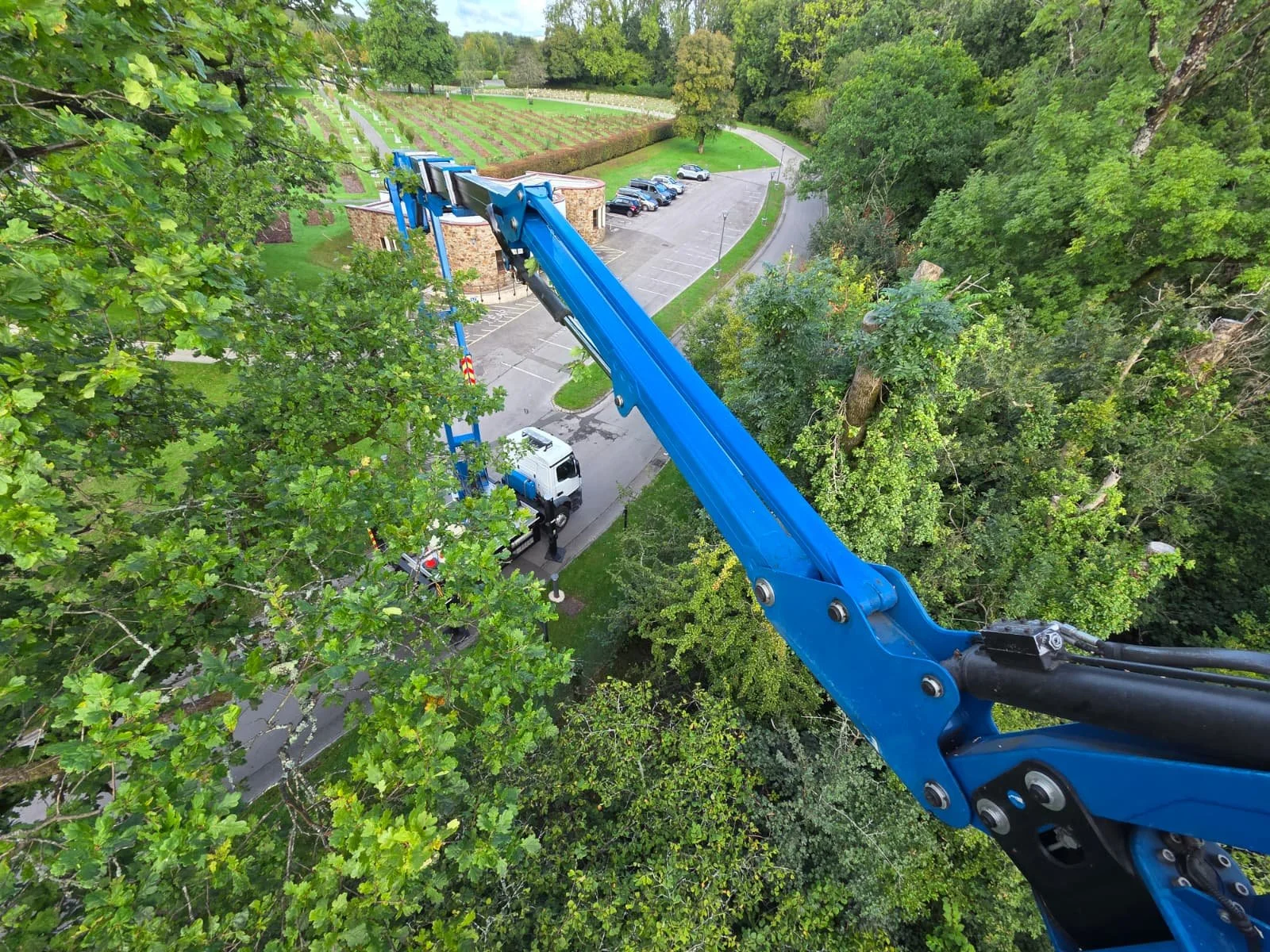
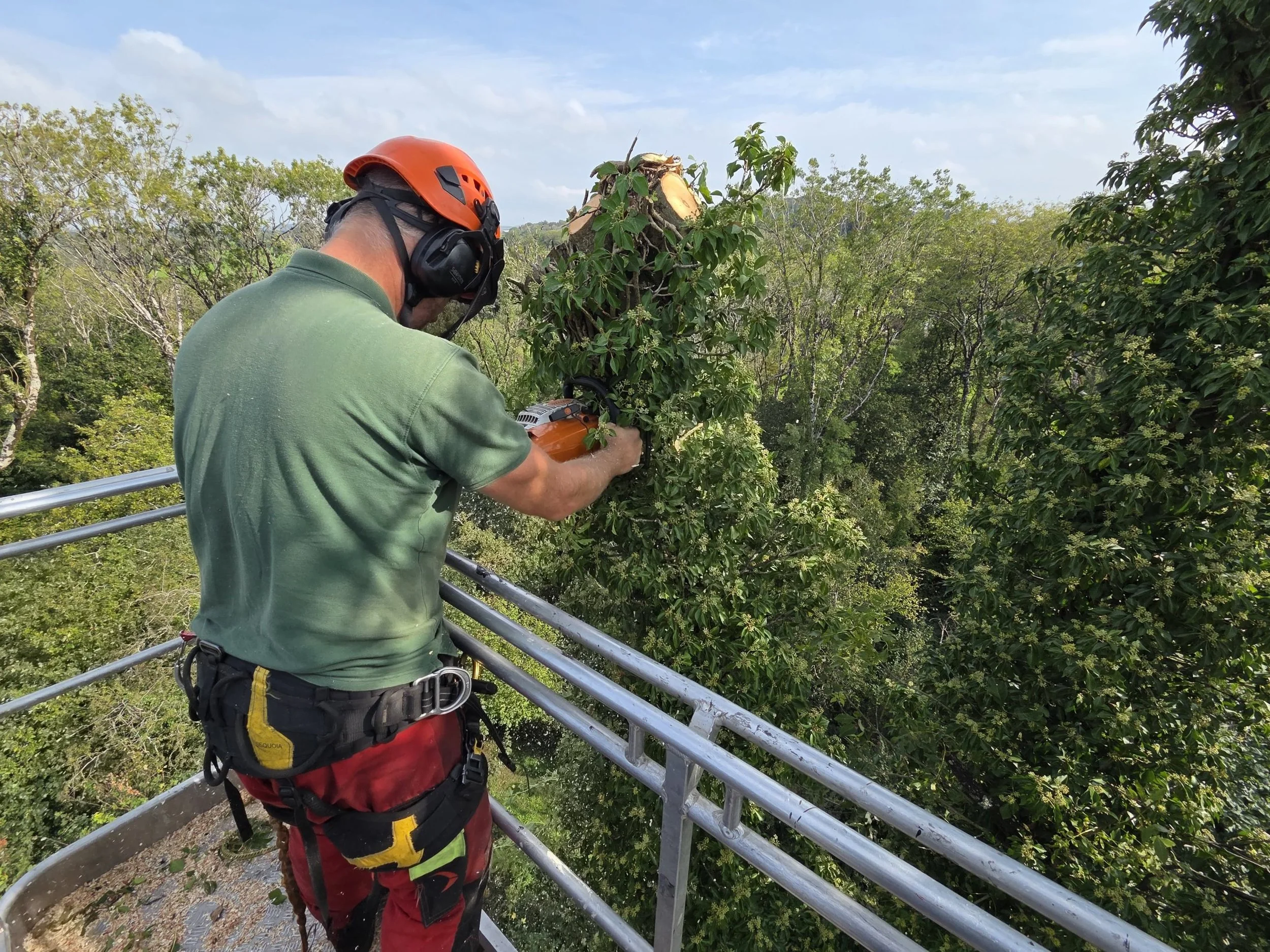 At height
Dead wood out, before it drops.
Every tree sheds branches as it grows. Some dead wood is harmless, but larger dead limbs over a garden, driveway, path or road are a real risk, especially in high winds.
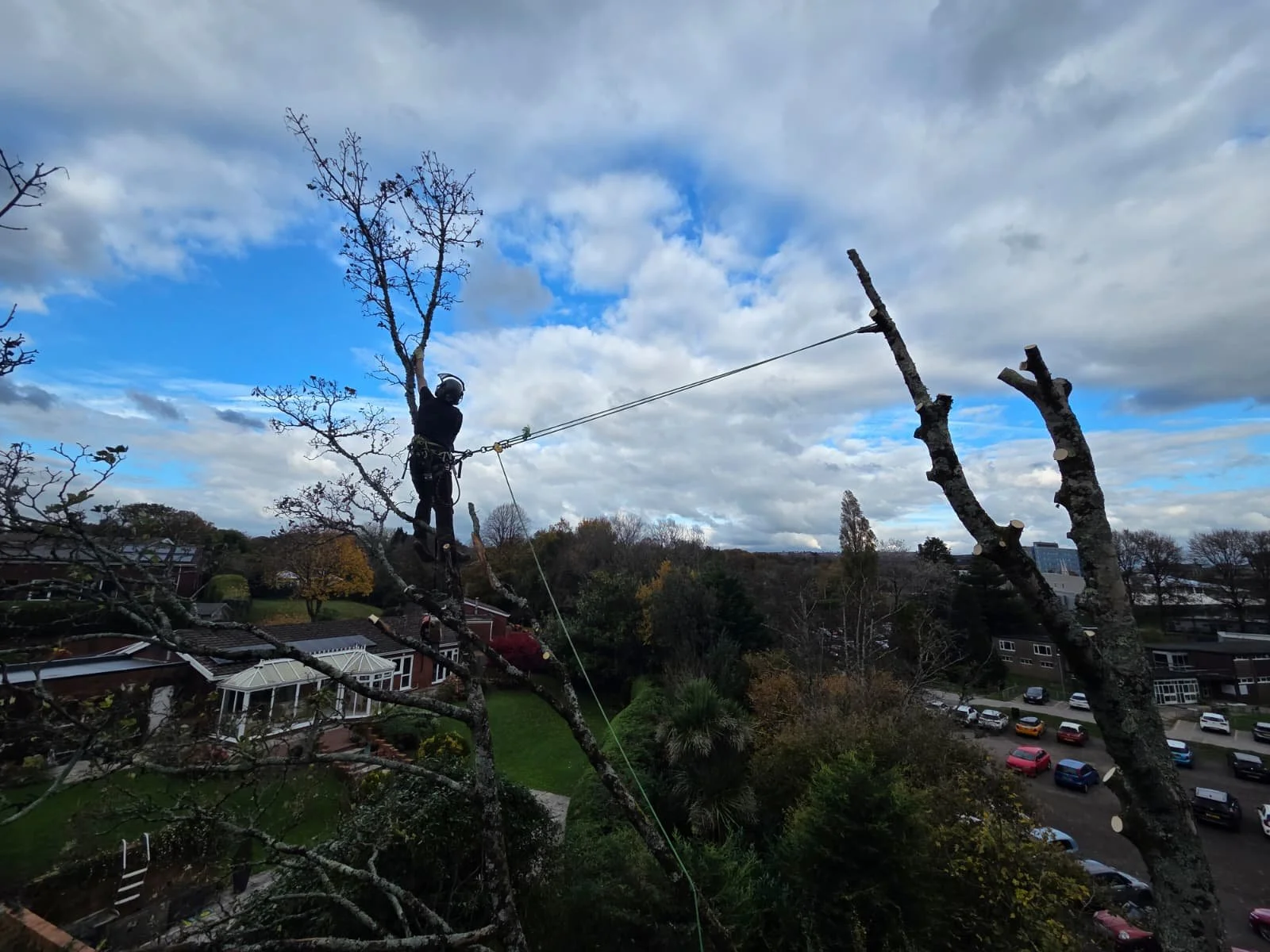
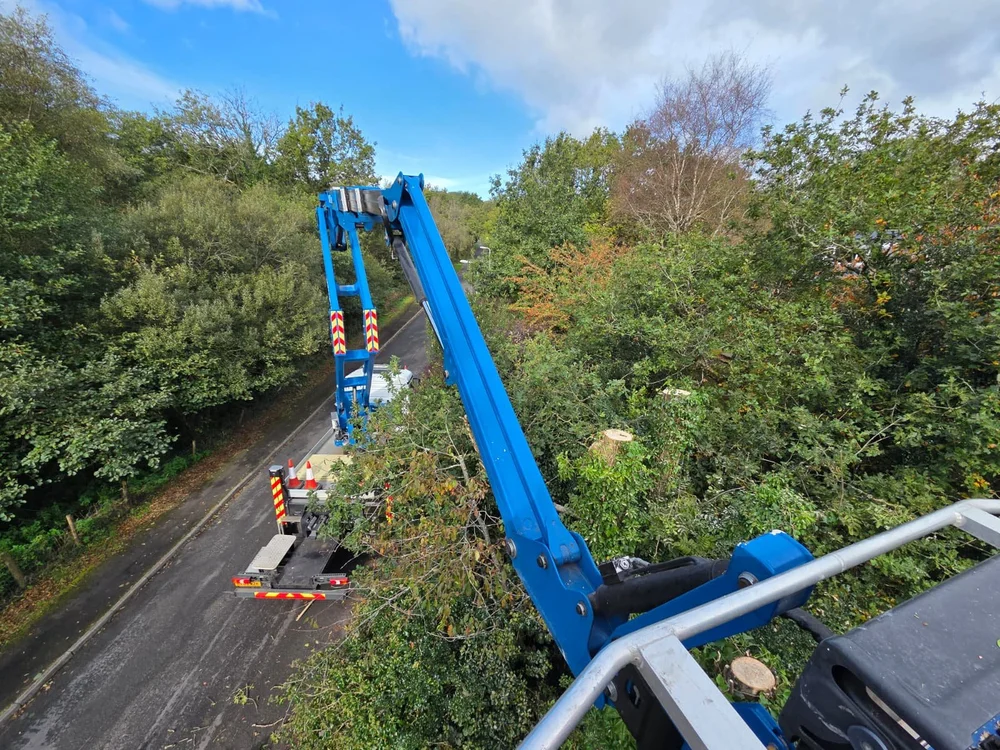
Deadwooding means working through the crown and removing dead, dying, broken and hanging branches. From the platform or on ropes, each one is cut cleanly and lowered or dropped safely, depending on what is underneath.
Dead wood is also valuable habitat for insects, fungi and birds. Where it is safe to do so, Will can leave some in place. If the tree has more widespread problems, it may need crown reduction or, in some cases, removal.
When a tree needs deadwooding.
Visible dead branches
Bare branches with no leaves in summer, peeling bark or wood that has started to crack and split.
Over people or property
Dead limbs above a garden, patio, driveway, path, road or parked cars, where a fall could do real damage.
After a storm
Broken and hanging branches left after high winds need taking down before they fall on their own.
Deadwooding, start to finish.
Send us photos
Show the tree, the dead branches if you can see them and what is underneath.
Will checks the tree
How much dead wood there is, what caused it, and whether the tree is protected or has nesting birds.
A clear quote
A plain quote that explains what will be removed and how.
Made safe and tidied
Dead wood is taken out from the platform or on ropes, and the site is left tidy.
Deadwooding in action.
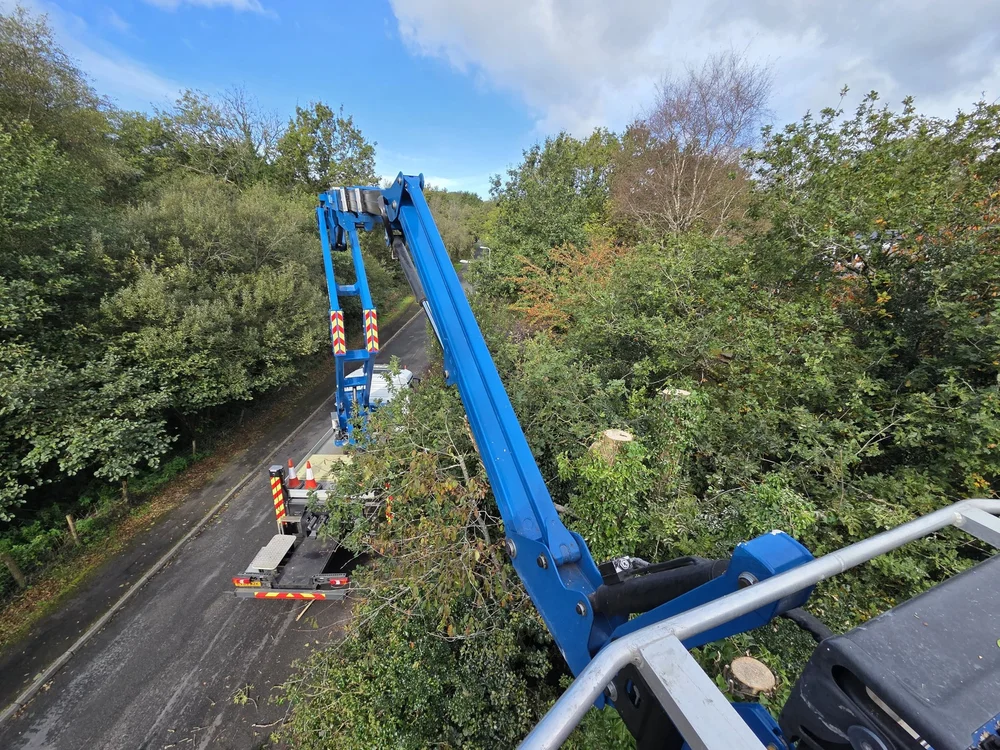
Deadwooding questions.
How do I know if a branch is dead?
Look for branches with no leaves when the rest of the tree is in leaf, bark that is peeling or falling away, and wood that is cracked or brittle. In winter it is harder to tell, so photos from summer help if you have them.
Is dead wood a sign the tree is dying?
Not always. Most trees have some dead wood, and losing lower or shaded branches is normal. A lot of dead wood high in the crown can point to a wider problem, which Will can look at.
When is the best time for deadwooding?
It can be done at most times of year. Summer makes dead branches easiest to spot, but nesting birds need checking first. Storm damage should be dealt with as soon as possible.
Do you leave any dead wood for wildlife?
Where it is safe, yes. Dead wood away from paths, roofs and play areas can be left as habitat. Anything that could fall where people go comes out.
Do I need permission for deadwooding?
Removing dead branches is often treated differently from other work on protected trees, but the rules vary. Where a tree has a Tree Preservation Order or is in a conservation area, it is worth checking with Cardiff Council first, and Will can help with that.
Other tree work we do.
Crown Reduction and Thinning
A smaller or lighter canopy that keeps the tree's natural shape.
About crown reduction and thinningTree Pruning and Shaping
Formative and structural pruning for a healthier, safer and better-looking tree.
About tree pruning and shapingEmergency Tree Work
Storm damage, fallen trees and urgent hazards made safe.
About emergency tree workDeadwooding across Cardiff.
We are based in Cardiff and work across the city. Further out? Check your postcode and Will can confirm.
Dead branches overhead?
Send a few photos of the tree and what is underneath. Will gets back to you to talk it through and arrange a quote.