
Pollarding in Cardiff.
Some trees are best kept to a set size. Pollarding cuts the branches back to the same points every few years, keeping suitable trees such as willows, limes and planes in check.
- City & Guilds NPTC Level 2
- Aerial platform and rope access
- Based in Cardiff
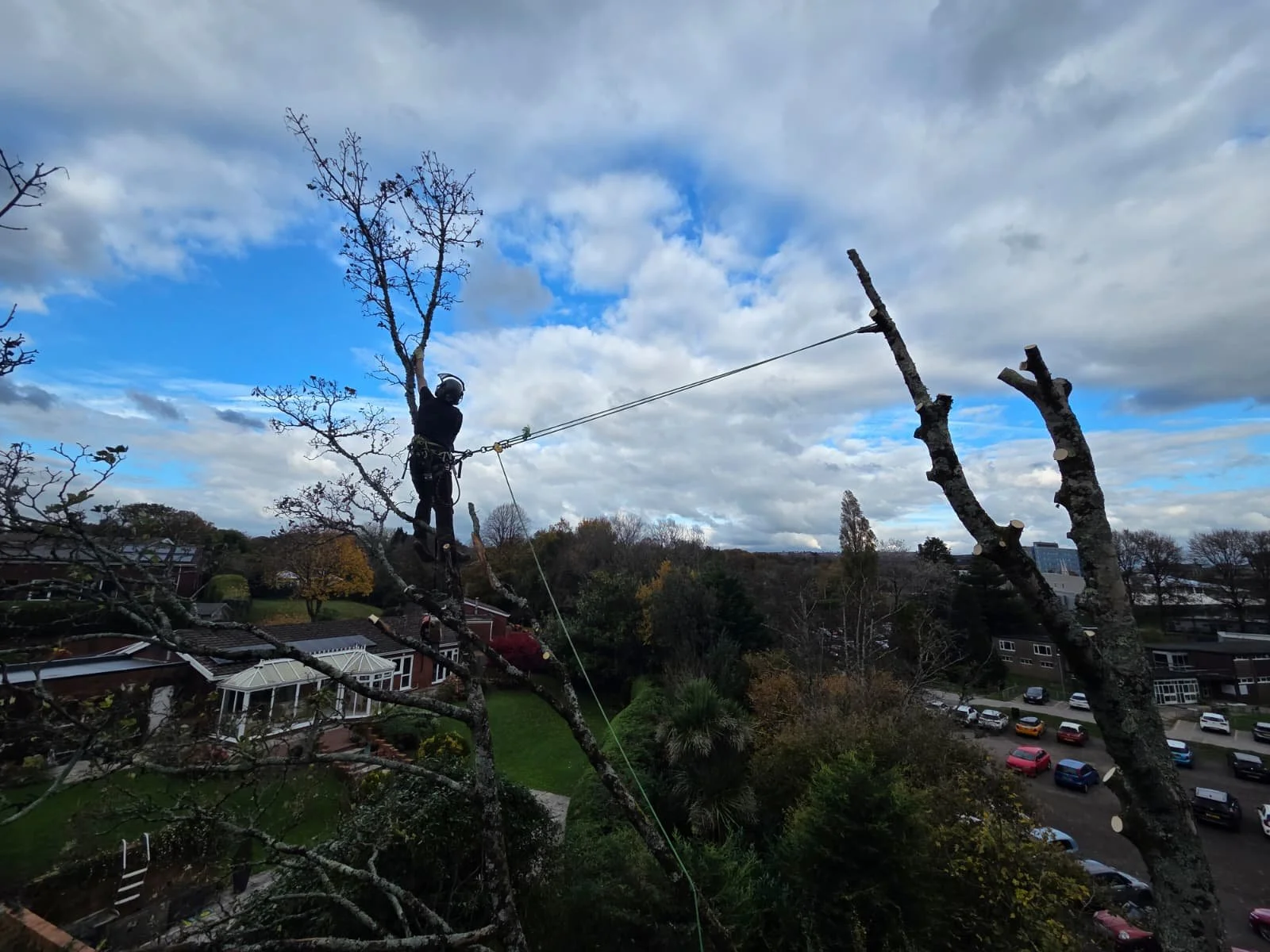
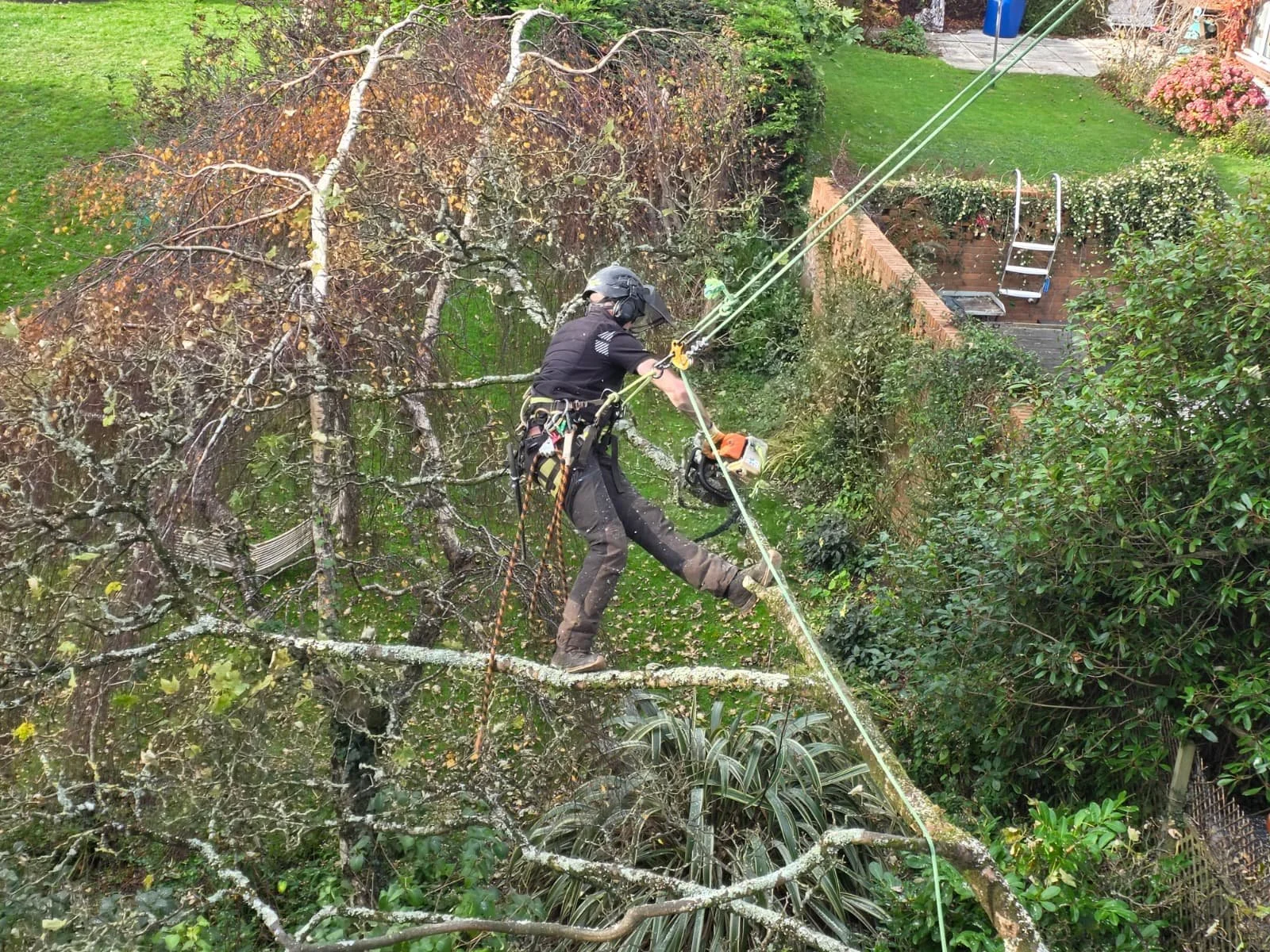 Rope work
Cut back to the framework.
Pollarding is a traditional way of managing trees. The branches are cut back to the main framework, or to the knuckles where earlier cuts were made, and the tree sends out new shoots from those points.
Once a tree has been pollarded, it needs cutting back regularly, usually every few years, to keep it in shape. Letting a pollard go too long means heavy regrowth on weak attachment points, which can become a hazard.
Pollarding suits some species far better than others. It works well on willows, limes and planes, but is not right for every tree. If you want a smaller tree that keeps a natural shape, crown reduction is usually the better choice.
When pollarding makes sense.
Existing pollards
Trees that have been pollarded before and are due their next cut, before the regrowth gets too heavy.
Keeping a tree small
Suitable trees in tight spaces that need keeping to a fixed size year after year.
The right species
Willows, limes, planes and other species that respond well to regular hard cutting.
Pollarding, start to finish.
Send us photos
Show the whole tree and, if it has been pollarded before, the old cut points.
Will checks the tree
Whether the species and tree suit pollarding, plus protection and nesting birds.
A clear plan
A plain quote that explains the cut and how often the tree will need doing again.
Cut and tidied
The tree is cut back to its framework and the site is left tidy.
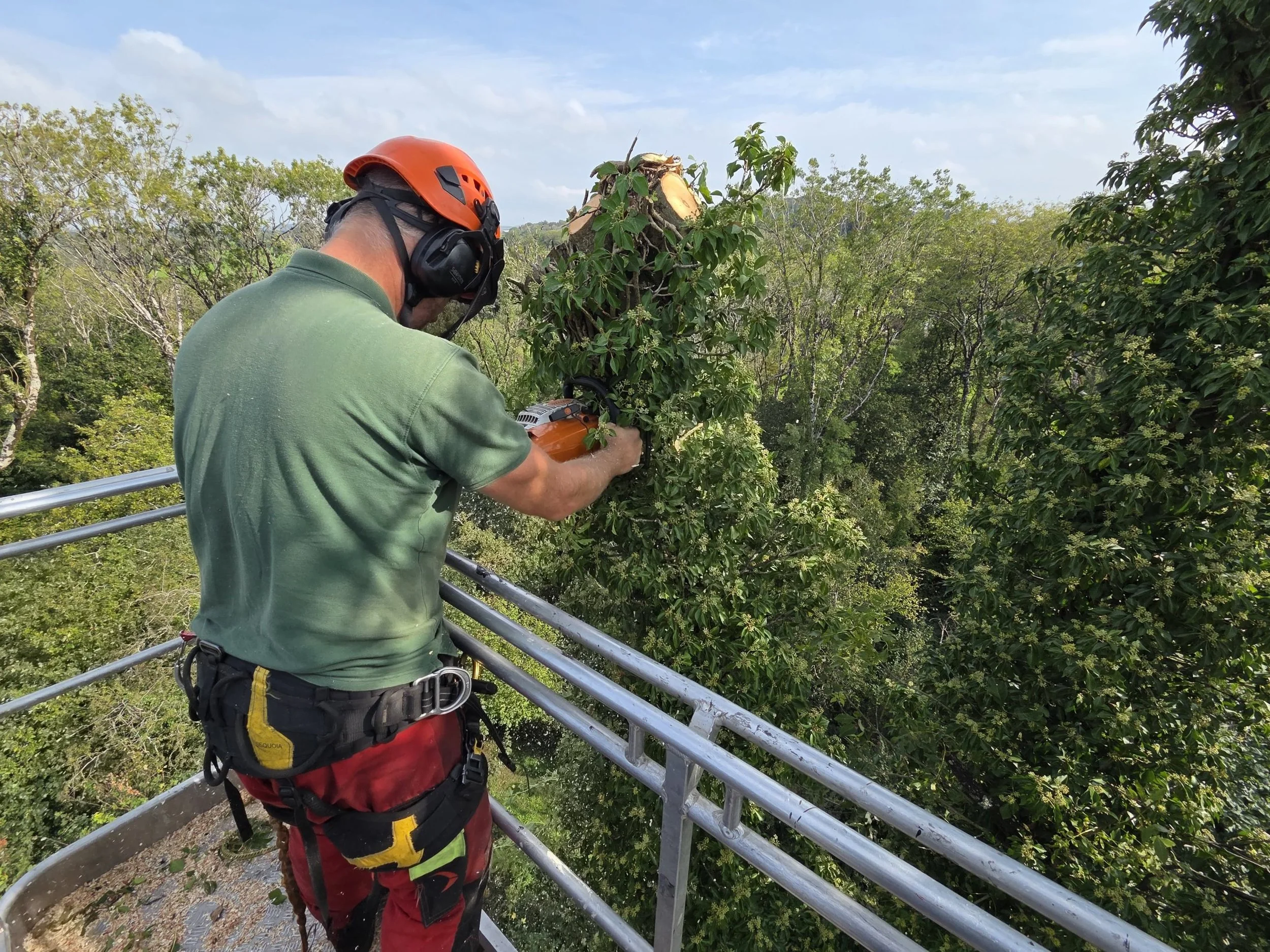
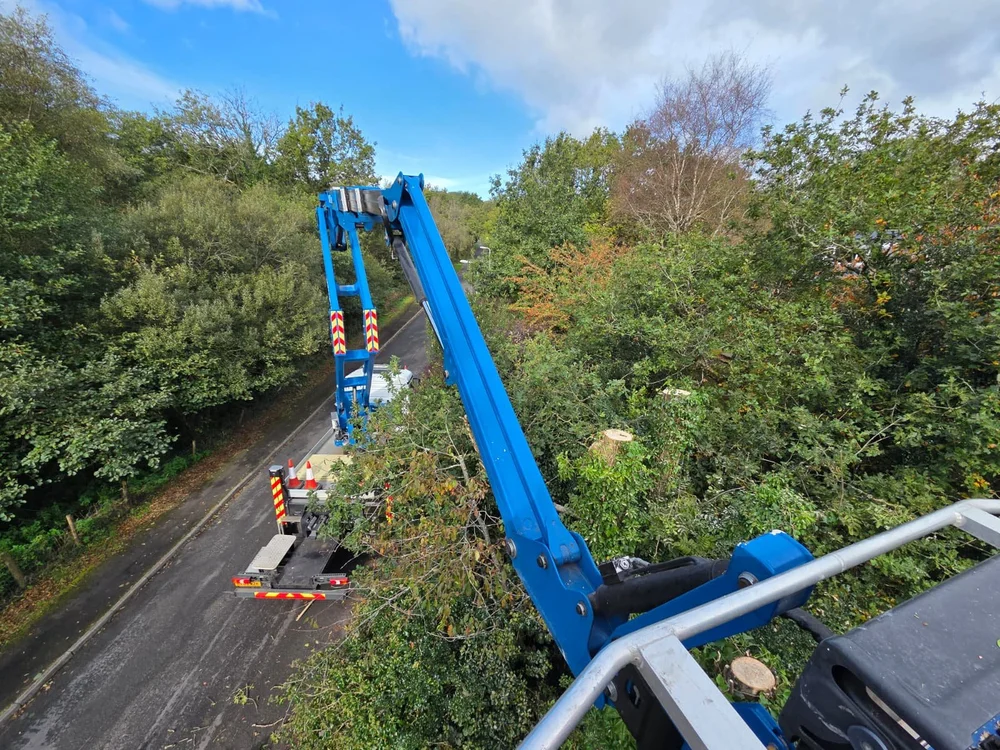
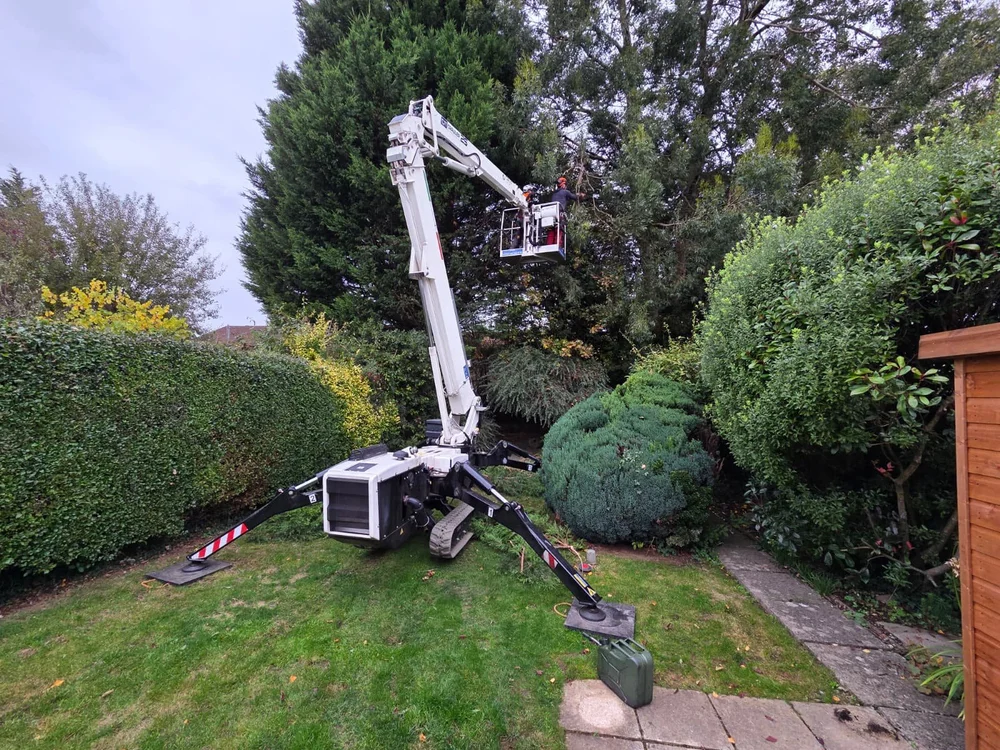
Out on the job.
Pollarding questions.
Which trees can be pollarded?
Willows, limes and planes are classic pollards, and some other species respond well too. Many trees do not, which is why Will checks the species and condition before recommending it.
How often does a pollarded tree need cutting?
Usually every few years, depending on the species and how fast it grows. Keeping to a regular cycle stops the new branches getting too heavy.
Can you pollard a large, mature tree?
Starting to pollard a mature tree that has never been pollarded can do it real harm, so it is not usually recommended. Crown reduction is normally a better way to make a big tree smaller.
Is pollarding the same as topping?
No. Pollarding is a planned, regular cut back to the same points on suitable trees. Topping cuts branches at random and usually leaves the tree weak and untidy.
Do I need permission to pollard a tree?
Sometimes. A tree covered by a Tree Preservation Order usually needs consent from Cardiff Council before work. For most trees in a conservation area, six weeks' written notice to the council is usually required. Will checks this before anything is booked and can help you through it.
Other tree work we do.
Crown Reduction and Thinning
A smaller or lighter canopy that keeps the tree's natural shape.
About crown reduction and thinningTree Pruning and Shaping
Formative and structural pruning for a healthier, safer and better-looking tree.
About tree pruning and shapingTree Felling and Removal
Dead, dangerous or in the wrong place. Felled or dismantled safely, with the site left clear.
About tree felling and removalPollarding across Cardiff.
We are based in Cardiff and work across the city. Further out? Check your postcode and Will can confirm.
Pollard due a cut?
Send a few photos of the tree. Will gets back to you to talk it through and arrange a quote.